Keynote
40–45 minutes
The full talk, including a guided in-room exercise with the three questions.
Leadership Keynote · Talk 04
Why Survival Skills Don't Retire — They Get Promoted
A leadership keynote on the childhood patterns that quietly run the meeting — and how to choose differently.
The Idea
Your leadership style may just be a coping style in a suit.
Most leaders don't lead from strategy. They lead from the earliest patterns they formed to survive. I know, because I've been carrying mine for more than fifty years. This keynote starts there — with a twelve-year-old Black military kid, frozen on the second of six blue Air Force buses outside Rosenwald Junior High in Panama City, Florida, in late August 1970. That was me. In the time it took to walk down that aisle, I started learning three lessons no one would have called leadership training: read the room. Never let them see you look foolish. Depend only on yourself.
Then the talk follows those lessons into a career — and shows how well they worked. Reading the room made me the recruit in basic training who never got dressed down, then the recruit put in charge of the barracks, who led fifty recruits by consensus to graduate with honors. Never looking foolish made me the most prepared person in any meeting. Depending only on myself made me the problem solver on a Los Angeles news assignment desk, and later a senior producer at the Travel Channel with a staff of seventy-five. Low drama. Always prepared. Never made the meeting about me. Those are the people who get promoted. Which is the sentence at the heart of the talk: survival skills don't retire. They get promoted.
Then they become a ceiling. In the O.J.-era editorial meetings, I had something to say and said nothing — and in television, silence has a name: dead air. At the Travel Channel, I tested my best ideas quietly with a colleague first, then sat in pitch meetings hearing them come out of someone else's mouth. None of it was a lack of talent. It was automatic. The skills that got me into the room were keeping my best work out of it. The audience meets a gallery of familiar figures — the over-preparer, the peacekeeper, the fixer, the invisible one, and the one who never lets them see you sweat — and, usually with a laugh, recognizes itself.
The turn comes from somebody else. In late 1998, my executive producer at the Travel Channel announced, in front of the whole team, that I would be editing everyone's scripts — a public interruption of a pattern she saw before I did. That is leadership, and every person in the room can do it for someone on their team. But the talk is honest that a breakthrough isn't a cure: a few months later, so sick with the flu I couldn't stand, I insisted on directing the Travel Channel's first-ever live broadcast anyway — and we missed the start of our broadcast window. I thought showing up was leadership. Handing it off would have been.
The keynote closes with a practical tool built to be used in the few seconds before you walk through a door — three questions, each paired with an experiment for the week ahead. Trace: who taught me this move? Test: does this moment actually require it? Choose: what would I choose if I weren't just surviving? And for the leaders in the room, one more: who on your team is waiting for your permission? The twelve-year-old got you into the building. He doesn't have to run the meeting.
What Audiences Leave With
No history lecture, no jargon. Attendees leave with:
Ideal for: corporate leadership-development programs · Chief People Officer and CDO forums · SHRM and ATD conferences · professional associations · employee resource groups · veteran transition programs · executive-education programs · leadership retreats and kickoffs
Formats
Keynote
The full talk, including a guided in-room exercise with the three questions.
Extended Program
The full keynote plus audience Q&A.
Featured Talk
A shorter cut for conferences, panels, and featured-speaker slots.
Workshop formats developed on request.
Contact for rates.
About the Speaker
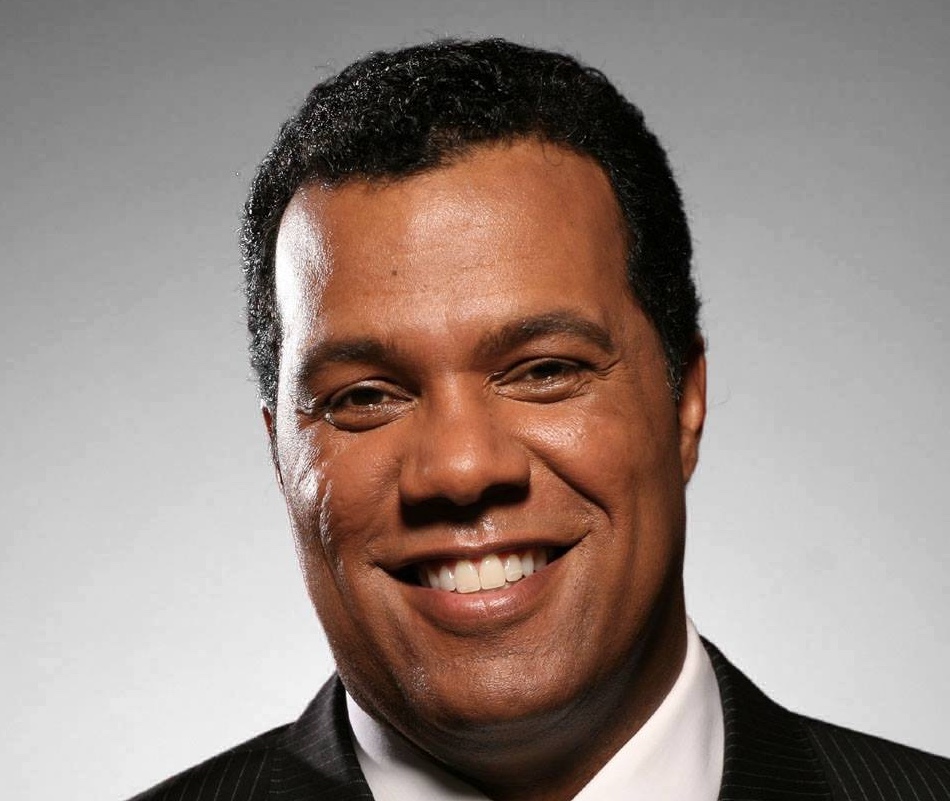
Michael Gordon Bennett spent three decades across radio, television, and independent production — as a Senior Assignment Editor, Producer, and Writer in local radio and television news in Los Angeles, a producer at the Travel Channel, and the founder and CEO of 727 Squared Entertainment. His 2026 memoir, Out of Frame: Growing Up Where I Didn't Belong, is a first-person account of reverse busing, military family life, and the racial calibration of the 1970s Deep South, framed through the social science of adaptation, code-switching, and the false self; it is in development as a feature film.
He is a U.S. Air Force veteran and the son of a twenty-year Air Force enlisted man. He holds a BA in Journalism from California State University, Northridge, and a Certificate in Feature Film Writing from UCLA. His WWII feature screenplay Barrage was recognized at the Austin Film Festival, the Los Angeles International Screenplay Awards, and the Big Apple Film Festival. He is the founder of the T.R.U.T.H. Initiative, a nonprofit that uncovers, preserves, and amplifies overlooked histories — including the erased legacies of marginalized veterans — through storytelling, education, and cultural engagement.